Our Summer Will Come Again Kanji
Hanzi vs Kanji // Japanese Kanji Not To Utilise in Chinese
Hanzi vs Kanji // Characters You Shouldn't Confuse
Today we talk about two scripts that announced the same, but things aren't always as they seem. We are referring to Hanzi vs Kanji, the beautiful scripts of Mandarin Chinese and Japanese.

Both Japanese and Chinese have a long history of sharing characters with each other, simply somewhere along the way a few Japanese kanji accept come up to have completely different (even obscene) meanings when used in Chinese.
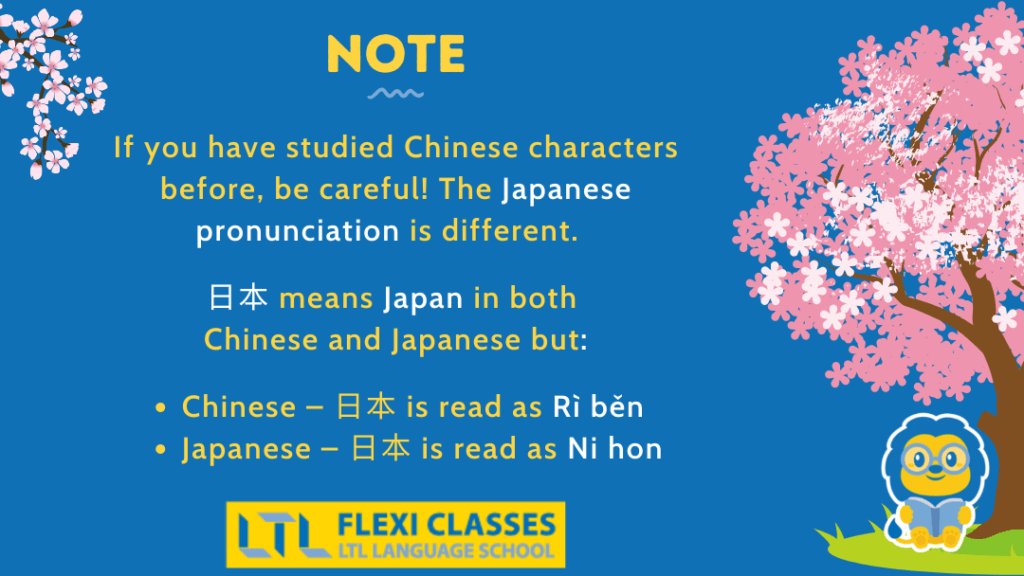
When y'all learn Japanese, or Chinese, you'll notice that there is a cardinal crossover with Hanzi and Kanji.
Let's take 年 for example.
This means yr in both Chinese (nian) and Japanese (toshi). Two for the cost of one. First-class!
You'll come to realise some parts of a Japanese sentence read/mean most the aforementioned as Standard mandarin Chinese – and whilst this is a big help, that doesn't mean every character yous run into has the same meaning in both Japanese and Chinese.
And that is exactly where the inspiration for this commodity has come from!
Scout out for these kanji that might get you in problem.
Hanzi vs Kanji – 素敌 vs 素敵
Hanzi vs Kanji – 我 & 我々
Hanzi vs Kanji – 我慢
Hanzi vs Kanji – 怪我
Hanzi vs Kanji – 邪魔
Hanzi vs Kanji – 日本人
Hanzi vs Kanji – FAQ's
Hanzi vs Kanji #1 // 素敌 vs 素敵
| Chinese (Hanzi) | Japanese (Kanji) |
|---|---|
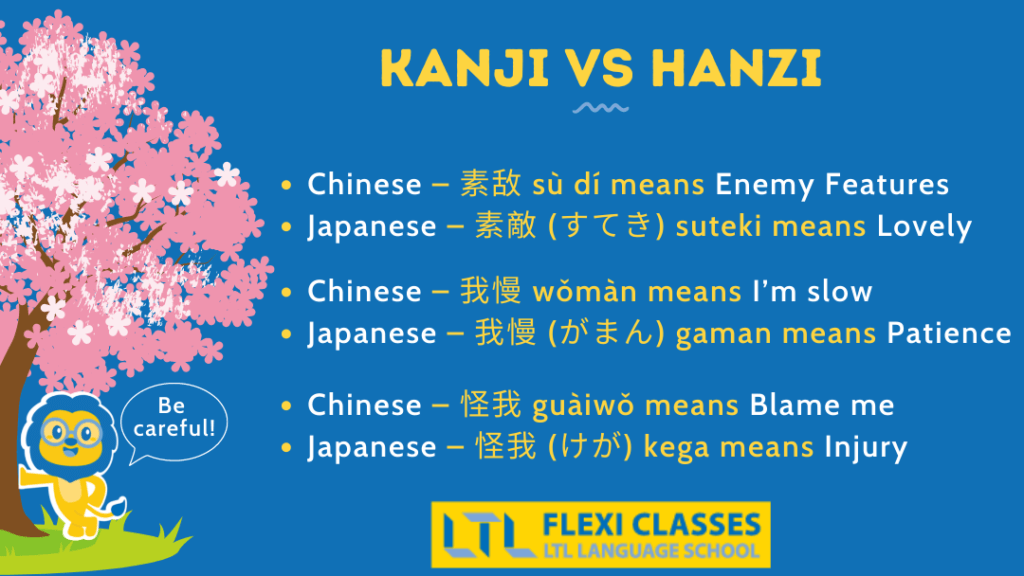
| 素敌 | 素敵 (すてき) |
| sù dí | suteki |
| Enemy Features 👿 | Lovely, wonderful, cute, attractive |
Obviously enemy elements are attractive?
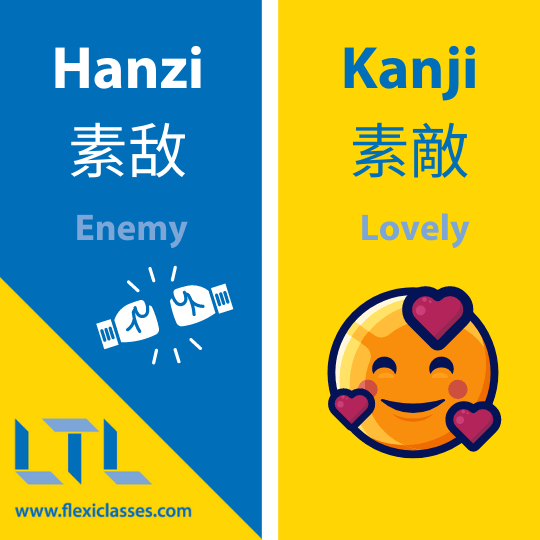
In Japanese 'suteki' is used every bit a complement, like when something wonderful happens!
Chinese however is a unlike story… when Chinese come across 素敌, they empathise information technology as:
- 元素 yuán sù | chemical element, feature
- 敌人 dí rén | enemy
So the unsaid meaning ends up becoming the features of an enemy!
Maybe that would requite the image of horns or a death stare?
Certainly not the way y'all would want to describe something!
A way to say 'suteki' in Chinese would be with words like
- 漂亮 piāo liàng | beautiful
- 美丽 měi lì | lovely
- 很好 hěn hǎo | great, well done
Allow's endeavour not to tell someone they have the elements of an enemy when trying to complement them!

How To Learn Kanji // The Ultimate Tips & Tricks Yous Should Know
How to learn Kanji? Generally, you'll need to learn virtually 1,000-2,000 Chinese characters in Japanese. Hither'southward the best way to become most learning them.
Hanzi vs Kanji #2 // 我 & 我々
| Chinese (Hanzi) | Japanese (Kanji) |
|---|---|
| 我 ? | 我々 (われわれ) |
| wǒ ? | wareware |
| Me/I… | We |
What did we or me practice?
Japanese uses 々 to stand for a repeated kanji and make things plural.
- 日々 (ひび) hibi | days, or every day
- 星々 (ほしぼし) hoshiboshi | stars
- 時々 (ときどき) tokidoki | occasionally, every once in a while
It's very useful and saves time when writing kanji out past hand!
'Wareware' is used more past guys when referencing themselves with a powerful group as 'nosotros', but it'south not oftentimes used in daily conversation, unless you're in Naruto (see below).
However, Chinese doesn't even accept 々! There'due south no pinyin for information technology and information technology won't even show up in Pleco!
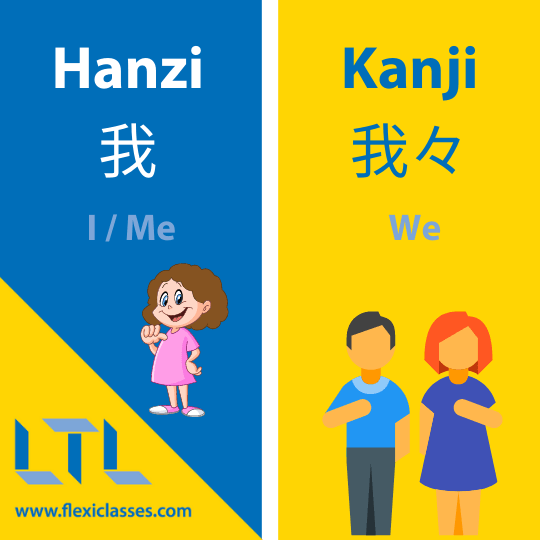
When there's a character repeated, Chinese does all the work of writing out the full character instead of taking a shortcut:
- 天天 tiān tiān | every day
- 星星 xīng xīng | star
- 常常 cháng cháng | often, ofttimes
All the same, in the case of 'wareware', Chinese doesn't just repeat 'wǒ' to go far plural. 我我 would just hateful 'me me', non much sense there.
As there's no 々, the way to say the plural 'we' in Chinese would exist
- 我们 wǒ men = nosotros, united states
- The 们 (men) makes the discipline plural.
Just know that 'wǒ men' doesn't comport the same powerful manly Naruto vibes that 'wareware' does!
Hanzi vs Kanji #3 // 我慢
| Chinese (Hanzi) | Japanese (Kanji) |
|---|---|
| 我慢 | 我慢 (がまん) |
| wǒ màn | gaman |
| I'1000 ho-hum | Patience, endurance, cocky-restraint |
The path to patience, is a slow one, apparently.
'Gaman' is a very important concept in Japanese culture. To button yourself through difficult times or to concur on just a flake longer.
This national virtue of 'gaman' helps Japanese to persevere and tolerate unexpected difficulties (merely don't push yourself too hard).
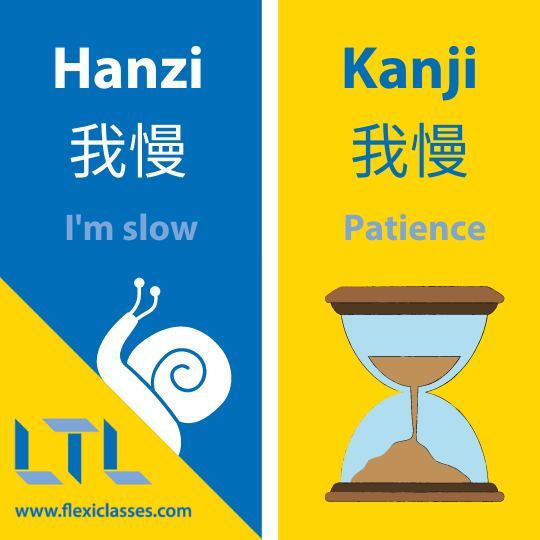
Nonetheless, the kanji translated directly to Chinese completely loses its meaning, the honourable concept but ends up interpreted as 'I'm slow'.
About likely beingness tiresome is not seen as a national virtue.
A way to say 'gaman' in Chinese would be
- 忍 rěn | endure, put up with, to restrain oneself
FUN FACT – '忍' in Japanese is actually used for 忍者 (にんじゃ) which is pronouced as the word we all know and love…ninja!!
Hanzi vs Kanji #4 // 怪我
| Chinese (Hanzi) | Japanese (Kanji) |
|---|---|
| 怪我 | 怪我 (けが) |
| guài wǒ | kega |
| Blame me | Injury |
Well at least we know who to arraign for the injury…
'Kega' in Japanese describes an adventitious mistake or 'injury' and can be written in hiragana, katakana or in kanji.
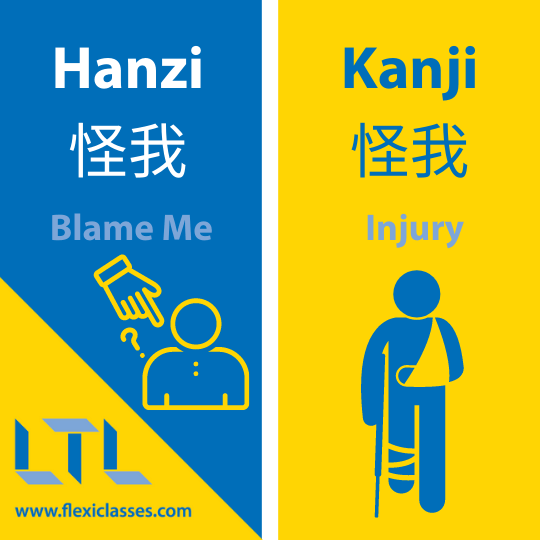
The kanji for the give-and-take are used phonetically to represent the sounds 'け' and 'が' instead of for the kanji'due south bodily meaning (kanji used phonetically are known as 当て字 ateji).
Using Japanese kanji phonetically can brand for some pretty interesting Chinese interpretations… thus 'injury' becomes 'blame me'.
'Guài wǒ' is used in Chinese when you're telling someone to put the blame on yourself and is used commonly in sad break up songs.
Take this one for instance – Andy Lau 刘德华 – 都怪我
However on the net it's used sarcastically as a slang '怪我咯' with the dash of 'but can you blame me?'
See a popular case here.
Taking the blame is quite unlike than saying you have an injury, and so try not to mix these meanings upwardly!
The manner to say 'kega' in Chinese is:
- 伤 shāng | injury


Hanzi vs Kanji #v // 邪魔
| Chinese (Hanzi) | Japanese (Kanji) |
|---|---|
| 邪魔 | 邪魔 (じゃま) |
| xié mó | jyama |
| Evil demon | Hinderance, nuisance, disturbance, interference |
Because only evil demons would dare to exist a nuisance? And so harsh!
In Japanese, the severity of 'jyama' is based on context, only information technology is used in a common gear up phrase for entering someone's house
お邪魔します (おじゃまします) ojamashimasu
Excuse me for disturbing, thanks for having me
Hopefully yous're not really hindering your friend, just this is said out of respect to the owner of the house y'all're entering.
All the same in Chinese, at that place's no range of severity, it directly gives the horrid paradigm of an evil demon!
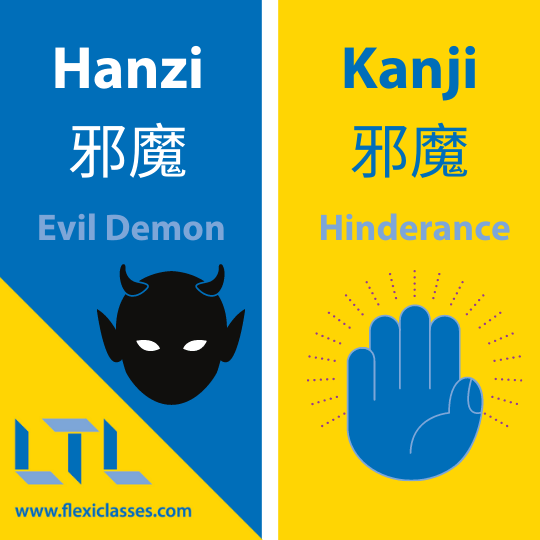
Chinese read 'xié mó' as:
- 邪恶 xié è | evil, sinister, wicked
- 魔鬼 mó guǐ | devil, demon, monster
Even if someone is being a slight nuisance, you wouldn't want to directly up phone call them an evil demon (correct?), and so please be careful with this 1!
A way to say 'jyama' in Chinese is
- 打扰 dǎ rǎo | disturb, trouble, bother, interrupt
Hanzi vs Kanji #6 // 日本人
| Chinese (Hanzi) | Japanese (Kanji) |
|---|---|
| 日本人 | 日本人 |
| rì běn rén | nihonjin |
| Japanese person/Screw myself | Japanese person |
Well that escalated quickly…
Emphasis is everything!
Putting emphasis on rì běn-rén means Japanese Person, buuuut accent on rì-běn rén changes everything.
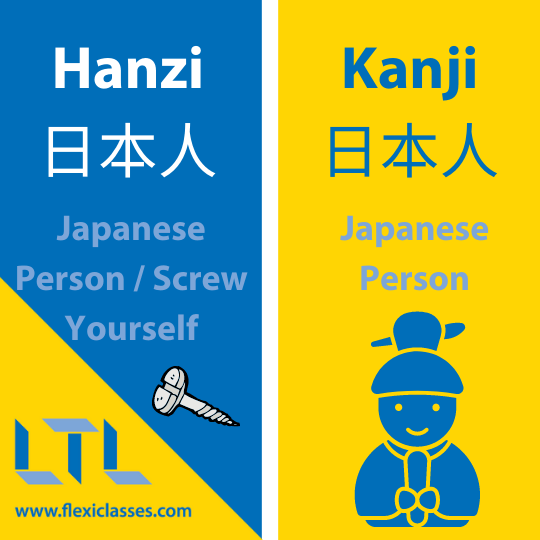
- 日 rì | (in southwest Chinese dialects) spiral
- 本人 běn rén | oneself
This fashion of using 'rì' comes from different Chinese dialects and has been circulating long before its use on the internet.
'Běn' can describe origin, source or roots.
- 本来 běn lái | Originally, at first
- 本能 běn néng | instinct, original ability
- 本身 běn shēn | itself, per se
- 本国 běn guó | i'due south ain country
It's all simply an unfortunate linguistic coincidence that could take been prevented if Japan had kept their previous name!
- Japanese >>> 大和 (やもと) yamoto | Aboriginal name for Japan
- Chinese >>> 大和 dà hé | Great harmony
But they decided to alter to 'japan' instead during the Heian period, and here nosotros are at present.
FUN FACT – 日本 get-go got it's Japanese pronunciation from Toisan Cantonese 'nippon'!
I personally studied Japanese before starting Chinese and remember the awkward misunderstandings when kanji didn't translate over like intended…
Skillful learning experience!
I promise these kanji explanations aid you on your own linguistic communication learning journey as you dive into the worlds of Japanese and Chinese!
Do you know anymore examples? Why not drop us a comment beneath and tell us!
Hanzi vs Kanji // FAQ's
Practise Chinese Hanzi and Japanese Kanji always accept the same significant?
No and this is of import to know because many practise – but non all!
When you learn Japanese, or Chinese, you'll notice that there is a fundamental crossover with Hanzi and Kanji.
Permit's accept 年 for example.
This means twelvemonth in both Chinese (nian) and Japanese (toshi). 2 for the toll of ane. Splendid!
Yous'll come to realise some parts of a Japanese sentence read near the same as Standard mandarin Chinese – and whilst this is a big help, that doesn't mean every graphic symbol you see has the aforementioned meaning in both Japanese and Chinese.
Does 々 exist in Chinese Hanzi?
No information technology doesn't.
Japanese uses 々 to stand for a repeated kanji and make things plural.
In Chinese you just write the same Hanzi once more. Some examples:
天天 tiān tiān | every day
星星 xīng xīng | star
常常 cháng cháng | oftentimes, frequently
What does 邪魔 mean in Chinese and Japanese?
These accept two very different meanings in each language and it's important to annotation the differences if yous study both Chinese & Japanese!
邪魔 in Chinese means evil demon!
Whereas 邪魔 in Japanese means hinderance, nuisance, disturbance or interference.
Does 日本人 hateful "Japanese people" in Chinese?
Yes but there's an alternate meaning also!
Emphasis is everything!
Putting accent on rì běn-rén ways Japanese Person, buuuut emphasis on rì-běn rén changes everything.
日 rì | (in southwest Chinese dialects) screw
本人 běn rén | oneself
This style of using 'rì' comes from different Chinese dialects and has been circulating long before its use on the internet.
Desire More than From LTL?
WANT TO LEARN JAPANESE? Check out our online Japanese courses here and get your linguistic communication skills on the road to fluency with Flexi Classes!
We offering a 7 day gratuitous trial to all new online students where you can study languages 24/7. Come and check it out free of charge and encounter what yous remember!
Guess what, we also have more!
In fact nosotros also teach:
- Mandarin
- Korean
- Vietnamese
- Taiwanese
- Shanghainese
Why not go involved in Flexi Classes and go part of this amazing community!
Source: https://flexiclasses.com/japanese/hanzi-kanji/
0 Response to "Our Summer Will Come Again Kanji"
Post a Comment